To select disposable medical devices for hospital procurement, define the clinical use first, verify the device and supplier against the rules in your market, test the product with end users, and compare total cost—not just unit price. This process applies to items such as procedure kits, gloves, syringes, and a 3 Layer Surgical Mask. A structured review of infection prevention requirements, supplier qualification, and lot traceability helps procurement teams avoid mismatched specifications, unclear documentation, and supply interruptions.
The challenge is practical: a product may look suitable in a catalogue but arrive with different packaging, unclear labeling, or evidence that does not cover the intended use. Procurement, clinical, infection prevention, quality, and supply-chain teams should agree on requirements before requesting bids. This guide provides a usable workflow, including checks and corrective actions. It also distinguishes regulatory evidence from marketing claims and includes a documented public procurement example rather than an invented hospital testimonial.
Before approaching suppliers, assemble a small cross-functional review team. Include a clinical user, infection prevention representative, procurement lead, quality or regulatory specialist, and a supply-chain or warehouse representative. For higher-risk products, involve biomedical engineering or the relevant technical specialist.
- Clinical-use brief: State the intended patient group, procedure, care setting, expected duration of use, and whether the device contacts sterile tissue, mucous membranes, or intact skin.
- Applicable requirements: Identify the regulatory framework for the country where the product will be supplied. Requirements differ by jurisdiction and product type; do not assume that a document accepted in one market is sufficient in another.
- Product specification: Record material, dimensions, connection or compatibility requirements, sterile or nonsterile status, packaging configuration, shelf-life needs, and labeling language. Specify performance requirements rather than brand names where possible.
- Evaluation tools: Prepare a bid comparison sheet, document checklist, sample assessment form, risk register, and a total-cost worksheet that includes freight, storage, training, waste, and potential product substitutions.
- Supplier evidence: Request the legal manufacturer and manufacturing-site details, applicable market authorization or conformity evidence, instructions for use (IFU), product specification, quality-system evidence, and batch or lot traceability information.
- Acceptance criteria: Agree in advance on who may approve a sample, what constitutes a defect, how deviations are handled, and what records must be retained.
For sterile products, establish how sterility is maintained through packaging and transport. Depending on the product and sterilization method, relevant standards may include ISO 11607 for packaging for terminally sterilized medical devices, ISO 11135 for ethylene oxide sterilization, or ISO 11137 for radiation sterilization. Confirm the applicable edition and scope with your quality or regulatory specialist; a standard reference alone does not establish that a specific product complies.
Preparation for hospital disposable medical device procurement
Step-by-step selection process for disposable medical devices
Tools: User interviews, procedure maps, incident or complaint records, current product specifications, and a clinical requirements form.
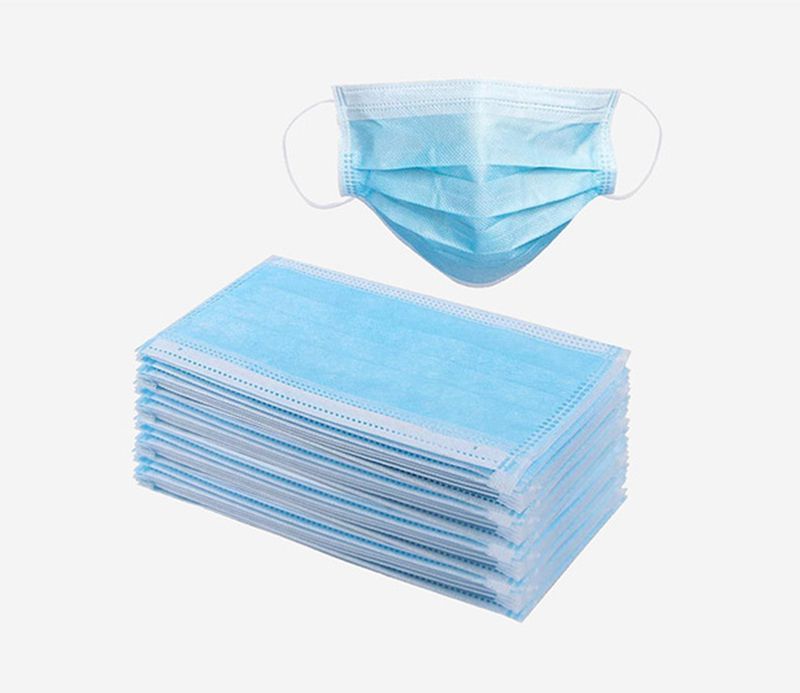
Action: Ask users what the device must do, where it will be used, and what current problems need solving. Separate essential requirements from preferences. For a 3 Layer Surgical Mask, for example, clarify whether the requirement is a medical face mask for a defined clinical use, the required fit and fastening style, and the applicable market performance and labeling requirements. Do not treat the number of layers as proof of filtration performance.
Parameters: Document intended purpose, user group, patient contact, sterile status, compatibility, size range, packaging quantity, and required performance evidence. Reference the applicable regulation or standard only after confirming it is appropriate for the device and market.
Check: Ask a clinician who will use the product to approve the written specification. Check that every requirement can be evaluated using a document, measurement, sample, or defined test.
If it fails: If users disagree or requirements are vague, pause the tender. Observe the workflow, clarify the intended use, and document which requirements are mandatory versus desirable before suppliers quote.
Step 1: Define the clinical need for hospital disposable medical supplies
Tools: Regulatory-document checklist, relevant regulator or notified-body databases, quality-system records, and a document-control log.
Action: Match the product name, model, manufacturer, manufacturing site, intended use, and market to the supplied evidence. Review labeling and the IFU alongside any registration, clearance, approval, or conformity documentation required in that jurisdiction. For example, a U.S. buyer should verify the applicable FDA pathway for the specific device; FDA establishment registration or device listing by itself should not be described as FDA approval.
Parameters: Record document title, issuer, reference number, covered models and sites, issue or expiry date where applicable, and the person who checked it. ISO 13485:2016 concerns medical-device quality management systems, while ISO 14971:2019 addresses medical-device risk management; neither certificate alone proves that a particular product meets every clinical or regulatory requirement.
Check: Confirm that the supplier's documents are current and internally consistent, and that the product offered is the same product covered by the evidence. Escalate unclear or conflicting records to your regulatory or quality lead.
If it fails: Mark the bid as pending or noncompliant according to the tender rules. Ask for clarification through the documented procurement channel. Do not accept a generic certificate as a substitute for product-specific evidence.
Step 2: Screen regulatory and quality evidence for disposable medical devices
Tools: Supplier questionnaire, audit or assessment plan, business-continuity questionnaire, and references or performance records where available.
Action: Confirm who legally manufactures the device, who distributes it, and who is responsible for complaints, recalls, and field safety notices. Assess manufacturing and distribution capacity, change control, complaint handling, and the supplier's ability to provide consistent product and documentation.
Parameters: Evaluate lead-time commitments, production-site information, shipping conditions, minimum order quantities, backup arrangements, communication contacts, and the process for notifying the hospital of changes to materials, design, manufacturing site, or packaging.
Check: Compare questionnaire responses with the proposed contract, regulatory evidence, and sample labeling. For critical supplies, document supply risks and identify an approved contingency rather than relying on an informal promise.
If it fails: Request corrective evidence, conduct a risk-based audit, restrict the supplier to a controlled trial, or exclude the bid if critical requirements remain unverified. Record the reason and approval decision.
Step 3: Qualify the supplier for hospital disposable device procurement
Tools: Controlled sample log, user evaluation form, relevant measuring or testing equipment, and a safe trial protocol approved by the hospital.
Action: Have representative users assess the product in the intended workflow. Evaluate usability, packaging, opening, fit, connections, readability of labeling, and compatibility with existing equipment. Do not use evaluation samples for patient care unless the hospital has approved the trial and all applicable controls are met.
Parameters: Use pre-agreed acceptance criteria. Record model and lot number, sample condition, evaluator role, observed issues, and whether the product meets each requirement. For a 3 Layer Surgical Mask, assess the relevant fit, comfort, fastening, breathability, and documented performance requirements for its intended use; visual inspection cannot establish filtration or fluid-resistance performance.
Check: Collect feedback from more than one representative user or shift where practical. Separate minor preferences from safety, performance, and workflow concerns.
If it fails: Quarantine the sample, document the problem, and ask the supplier for investigation or a corrected sample. Do not lower a safety-related acceptance criterion simply to complete a purchase.
Step 4: Evaluate samples of disposable medical devices in actual workflows
Step 5: Compare total cost for hospital disposable medical supplies
Tools: Total-cost worksheet, current consumption data, storage-cost estimates, and waste or disposal guidance from the hospital.
Action: Compare bids on equivalent specifications and purchasing conditions. Include the costs of purchase, freight, import duties where applicable, receiving inspection, storage, staff training, waste handling, and any required accessories or compatibility changes.
Parameters: Use the same annual demand assumption, unit of measure, delivery terms, shelf-life requirement, and payment terms for every bidder. Include the effect of pack size and usable yield; a lower quoted unit price may not mean a lower cost per procedure.
Check: Have finance and clinical users review the assumptions. Label estimates separately from quoted prices, and make the calculation reproducible from retained source documents.
If it fails: If bids are not comparable, issue a clarification or normalize the data transparently under the tender rules. Do not award based solely on the lowest headline price when mandatory clinical or compliance requirements are unmet.
Step 6: Set contract, delivery, and traceability controls
Tools: Contract checklist, purchase-order template, receiving inspection procedure, inventory system, and recall contact list.
Action: Put the approved product identifier, manufacturer, packaging configuration, documentation requirements, delivery conditions, change-notification duties, complaint process, and recall cooperation into the purchase documents. Require advance notice and approval for substitutions.
Parameters: Define how the hospital records lot or batch numbers, expiry dates where applicable, quantities, supplier, and receipt date. Set receiving checks for packaging damage, labeling, product identity, and any temperature or transport conditions relevant to the product.
Check: Test that warehouse staff can trace a received lot from purchase order to storage location and onward to the relevant clinical distribution records, in line with local policy and legal requirements.
If it fails: Hold affected stock from use, notify quality and procurement, and request supplier investigation. Follow the hospital's nonconforming-product and recall procedures; do not release product until an authorized person resolves the discrepancy.
Step 7: Monitor performance after award for disposable medical device procurement
Tools: Supplier scorecard, complaint log, inventory reports, nonconformance records, and periodic review calendar.
Action: Track delivery reliability, order completeness, product defects, user complaints, documentation changes, and corrective-action responsiveness. Review performance with clinical and quality stakeholders at a frequency based on product risk and purchasing volume.
Parameters: Set measurable indicators before contract start, such as on-time delivery against the agreed delivery date, percentage of orders delivered complete, and complaint closure status. Define each metric's calculation and data source; do not invent targets after reviewing a supplier's results.
Check: Compare results with the contract and baseline, review trends rather than isolated events, and record decisions and follow-up owners.
If it fails: Open a supplier corrective-action request, increase inspection or review frequency where justified, activate an approved alternative source if needed, and follow formal recall or safety-notice procedures when indicated.
Documented procurement case and lessons for disposable medical device buyers
The UK's National Audit Office published Investigation into government procurement during COVID-19 on 18 November 2020. This public review examined government procurement during the pandemic, including personal protective equipment procurement. It is an institutional procurement case, not a testimonial from an individual hospital buyer, and it does not establish that any particular device or supplier failed. Its relevance to hospital teams is the need to retain a clear audit trail when purchasing under pressure: record the requirement, supplier checks, decision rationale, approvals, and any exceptions. When an urgent purchase is unavoidable, document what was checked, what remains uncertain, and who authorized the residual risk.
For a hospital, the practical takeaway is to define an expedited pathway in advance. It should preserve essential safety, regulatory, and traceability checks while allowing authorized staff to shorten administrative steps that do not determine product suitability. A rushed purchase should not turn a supplier's catalogue description into a substitute for verifiable evidence.
Common errors in 3 Layer Surgical Mask and disposable device purchasing
- Choosing by unit price alone: Compare equivalent products and calculate total cost per usable item or procedure. Include freight, storage, packaging yield, and waste.
- Treating a product image as a specification: Confirm the exact model, materials, intended use, packaging, labeling, and performance documents. Images can be illustrative or outdated.
- Assuming layer count proves mask performance: A 3 Layer Surgical Mask label does not, by itself, establish conformity with a medical-mask standard or suitability for a particular exposure. Check applicable evidence and local infection-prevention policy.
- Confusing a quality certificate with product authorization: Check product-specific market requirements as well as the manufacturer's quality-system evidence.
- Accepting an unapproved substitution: Control changes to manufacturer, model, material, packaging, and production site. Reassess the product before use when a change could affect safety or performance.
- Skipping lot traceability: Capture lot or batch identifiers and expiry information when applicable at receipt. Ensure the information can support a targeted investigation or recall.
- Overlooking storage and expiry: Match order quantities to demand, storage capacity, shelf life, and stock-rotation practice. Follow the manufacturer's stated storage conditions.
- Relying on unverifiable success stories: Ask for references that can be checked and evaluate them against your own requirements. Do not treat anonymous testimonials or unsupported performance claims as evidence.
Summary and recommendations for hospital disposable medical device procurement
Effective disposable medical device procurement starts with a clear clinical specification and ends with ongoing supplier and product monitoring. Verify applicable market evidence, evaluate samples under controlled conditions, compare total cost on an equivalent basis, and preserve lot traceability from receipt onward. For masks, assess the intended use and applicable performance evidence rather than relying on the phrase 3 Layer Surgical Mask. Keep clinical, infection prevention, quality, procurement, and supply-chain teams involved, and document exceptions whenever urgency changes the normal process.
Hospitals considering suppliers such as ZOJE should apply the same documented evaluation used for any bidder: confirm the exact product and manufacturer, review applicable evidence, assess samples against approved criteria, and verify delivery and traceability arrangements. A supplier name is a starting point for due diligence, not a substitute for it.
References for disposable medical device procurement
- U.S. Food and Drug Administration: medical device regulatory information and device-specific database resources. Verify the pathway and current requirements for the product and market in question.
- International Organization for Standardization: ISO 13485:2016, ISO 14971:2019, ISO 11607, ISO 11135, and ISO 11137. Confirm the applicable scope and edition with qualified personnel.
- UK National Audit Office, Investigation into government procurement during COVID-19, published 18 November 2020.