Types of Disposable Infusion Sets
2026-03-11
Disposable infusion sets are essential devices used to deliver fluids, medications, blood products, and nutrients directly into a patient’s bloodstream. Widely applied in hospitals, emergency care units, and outpatient clinics, these single-use systems support safe and controlled intravenous (IV) therapy.
Below is a structured overview of the main types of disposable infusion sets and their clinical applications.
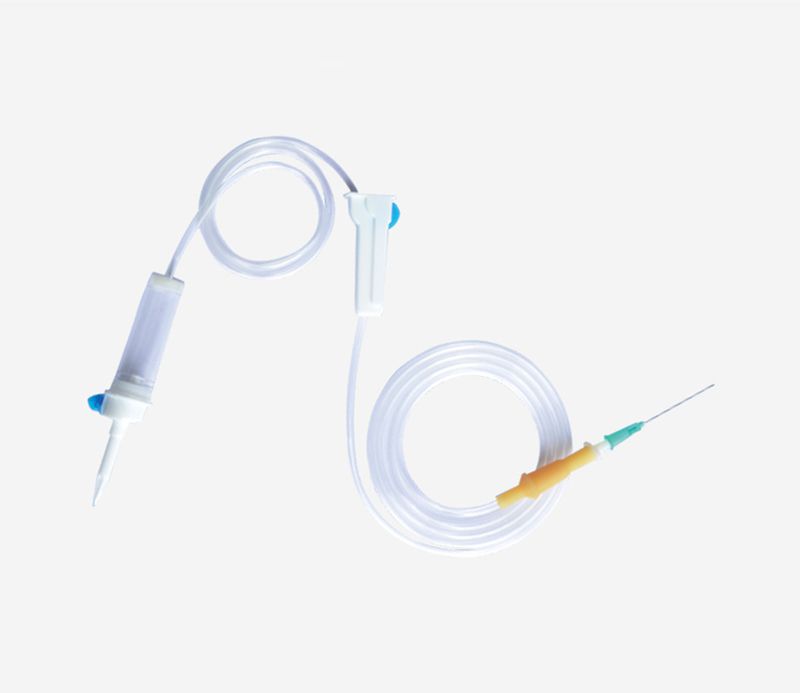
1. Gravity Infusion Sets
Gravity infusion sets rely on height difference and gravity to regulate fluid flow.
Key Features:
Standard drip chamber
Roller clamp for manual flow control
Spike for IV fluid bag connection
Transparent tubing
Applications:
Routine IV fluid therapy
Saline and glucose infusion
Basic medication administration
Gravity sets are commonly used in general wards where electronic pumps are not required.
2. Burette Infusion Sets (Measured Volume Sets)
Burette infusion sets include a calibrated chamber (usually 100–150 ml) that allows precise control of small infusion volumes.
Key Features:
Graduated burette chamber
Injection port for medication addition
Air vent and flow regulator
Applications:
Pediatric infusion therapy
Controlled medication dosing
Situations requiring accurate volume management
These sets are particularly important in pediatric and neonatal departments.
3. Vented and Non-Vented Infusion Sets
Vented Infusion Sets:
Include an air vent
Designed for rigid containers (glass bottles)
Non-Vented Infusion Sets:
No air vent
Used with collapsible IV bags
Selecting the correct type ensures smooth and uninterrupted fluid flow.
4. Blood Transfusion Sets
Blood infusion sets are specially designed for administering blood and blood components.
Key Features:
Built-in blood filter (typically 170–200 microns)
Larger drip chamber
Compatible with blood bags
Applications:
Whole blood transfusion
Plasma or platelet administration
The integrated filter helps prevent clots and particulate contamination.
5. Infusion Sets with Y-Site Injection Port
These infusion sets include a Y-shaped injection site that allows additional medication to be administered during infusion without disconnecting the main line.
Key Features:
Needle-free or latex injection port
Secure medication access point
Applications:
Combination drug therapy
Emergency medication addition
This design improves workflow efficiency in busy hospital environments.
6. Infusion Sets with Flow Regulator (Precision Flow Control)
These sets incorporate a precision flow controller for more accurate drip rate adjustment compared to standard roller clamps.
Key Features:
Calibrated dial regulator
Improved flow stability
Reduced risk of over-infusion
Applications:
Controlled IV therapy
Sensitive medication administration
7. Infusion Sets with Safety Features
Modern infusion sets may include safety mechanisms such as:
Needle-free connectors
Anti-backflow valves
DEHP-free tubing
Latex-free components
These features enhance infection control and patient safety, especially in high-risk environments.
Key Components of Disposable Infusion Sets
Most infusion sets include:
Protective spike
Drip chamber
Flow regulator
Flexible medical-grade PVC tubing
Injection port
Luer slip or Luer lock connector
Material quality and manufacturing precision directly affect flow stability and clinical reliability.
Choosing the Right Disposable Infusion Set
When selecting infusion sets for hospital procurement, consider:
Clinical department requirements (general ward, ICU, pediatrics)
Compatibility with IV containers
Flow control accuracy
Filtration needs (blood transfusion)
Compliance with international medical standards
Conclusion
Disposable infusion sets are available in multiple configurations to meet different clinical requirements — from basic gravity infusion to precision pediatric dosing and blood transfusion applications.
Understanding the types and functions of each infusion set helps healthcare providers ensure safe, accurate, and efficient intravenous therapy.