What Should Buyers Consider Before Choosing a Disposable Medical Supplies Supplier?
2026-11-05
Choosing a dependable supplier does not need to be a drawn-out process. In this guide, I’ll walk you through a simple, actionable checklist for evaluating ZOJE and other disposable medical supplies suppliers—from verifying product documentation to testing samples, comparing landed costs, and confirming delivery capacity. Use these steps to reduce quality, compliance, and stockout risks before placing an order.
What Should Buyers Consider Before Choosing a Disposable Medical Supplies Supplier?
Start with the intended use and destination market. A product that suits one clinical environment or market may not satisfy the regulatory and performance requirements of another. Before requesting quotations from ZOJE or any supplier, write down the product specifications, applicable standards, forecast volumes, and delivery requirements your business actually needs.
1. Confirm product specifications and regulatory documentation
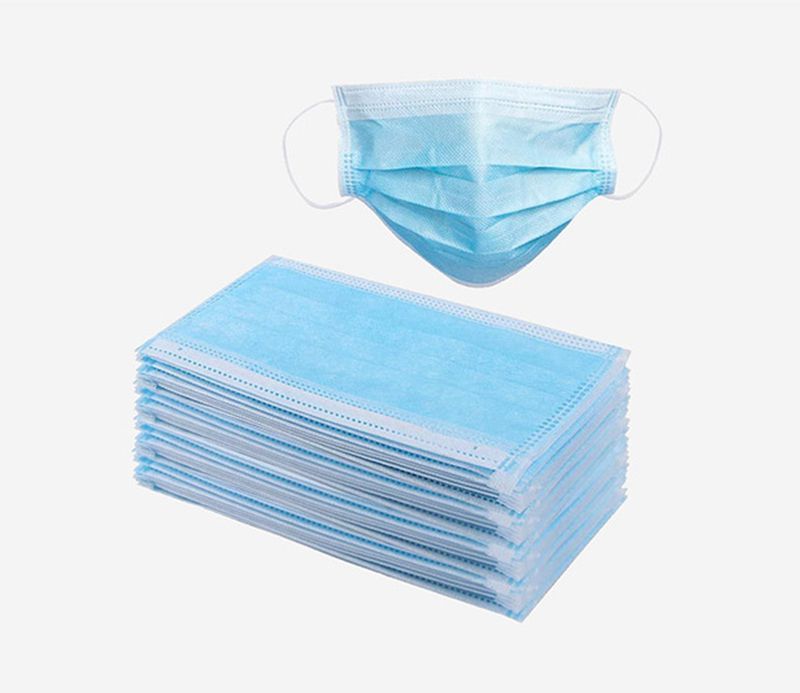
Ask the supplier for documentation that matches the exact product, model, intended use, and manufacturing site—not just a general company brochure. For Disposable Medical Masks, check the product classification and the requirements of the market where you plan to sell or use them.
- Request: product specification sheets, labeling and packaging details, declarations or registrations applicable to your market, and current test reports.
- Match reports to the product: confirm the product name, model, material, test method, laboratory, and report date. Verify that the tested configuration corresponds to the item being quoted.
- Check relevant standards: depending on product and destination market, mask documentation may reference EN 14683 or ASTM F2100. Test methods may include ASTM F2101 for bacterial filtration efficiency, ASTM F2299 for particulate filtration efficiency, and ASTM F1862 for synthetic blood penetration.
- Review quality-system evidence: ISO 13485 relates to quality management systems for medical devices. Confirm the scope, site, and validity of any certificate rather than relying on a logo or an unsupported claim.
Standards and regulatory obligations vary by product, intended use, and country. We recommend confirming requirements with your regulatory specialist or qualified testing partner before approving a product for a regulated market. When asking What Should Buyers Consider Before Choosing a Disposable Medical Supplies Supplier?, documentation traceability should be near the top of the list.
2. Evaluate quality controls with evidence, not promises
A quality assurance process should be visible in records and procedures. Ask how the supplier controls incoming raw materials, in-process production, finished goods, nonconforming product, and corrective and preventive action (CAPA). For disposable products, clarify how the supplier manages lot identification, packaging integrity, cleanliness, and any sterilization requirements that apply.
Use a written quality checklist and define acceptance criteria before sampling. For example, specify the permitted dimensions and tolerances in millimeters, required labeling fields, packaging condition, and the inspection level you expect. If a critical dimension must be controlled to 0.01 mm, first confirm that this tolerance is appropriate for the product and can be measured reliably; do not assume that every disposable medical item requires that precision.
- Request a sample inspection report and an example certificate of analysis or batch record, where applicable.
- Ask whether inspection is performed by lot, at what production stages, and against which approved specification.
- Agree on the sampling plan and defect classifications, such as critical, major, and minor defects.
- Ask how complaints, deviations, and product recalls are documented and escalated.
Do not treat “100% inspection” as a substitute for a validated process or clear acceptance criteria. Ask what is inspected, how results are recorded, and whether the inspection is appropriate to the product risk.
3. Test samples before approving a production order
Samples help you check product fit, usability, packaging, and consistency with the specification. They do not, by themselves, prove regulatory compliance or guarantee that a future production lot will match. For Disposable Medical Masks, evaluate the features relevant to your application, such as fit, comfort, construction, labeling, and the applicable performance test results.
- Send the supplier a written specification and request samples made to the quoted configuration.
- Record sample identifiers, receipt dates, packaging condition, and any differences from the specification.
- Have qualified staff evaluate usability and conduct or commission appropriate tests where required.
- Approve a signed sample or “golden sample” and reference it in the purchase order and quality agreement.
When comparing ZOJE with another disposable medical supplies supplier, keep sample evaluations consistent. Use the same checklist and test methods for each candidate so that your decision is based on comparable evidence.
4. Check manufacturing capacity and delivery reliability
A low quotation is not useful if the supplier cannot meet your replenishment schedule. Ask about monthly capacity for the specific product, current lead time, peak-season constraints, minimum order quantity (MOQ), and how production is scheduled after order confirmation. Clarify whether quoted capacity is dedicated, shared, or dependent on materials from third parties.
Build a simple delivery-risk review around your own forecast:
- Compare quoted lead time with your inventory cover and reorder point.
- Ask how the supplier communicates production milestones and shipment delays.
- Confirm packaging dimensions, palletization, export documentation, and Incoterms.
- Discuss contingency plans for raw-material shortages, equipment downtime, or a failed inspection.
For critical products, consider a staged order or a qualified backup source. This can reduce dependence on a single production schedule and help protect customers from avoidable stockouts.
5. Compare total landed cost, not just unit price
Request a quotation that makes its assumptions clear. Compare the product price alongside tooling or setup charges, packaging, testing, freight, insurance, duties, and any inspection costs. Calculate the total landed cost per usable unit, accounting for rejected goods, minimum order quantities, and inventory carrying costs.
| Evaluation area | What to request | Why it matters |
|---|---|---|
| Compliance | Market-specific documents and product-linked test reports | Helps identify regulatory and documentation gaps |
| Quality | Inspection plan, lot traceability, and CAPA process | Supports consistent acceptance and issue resolution |
| Supply | Product-specific capacity, lead time, and contingency plan | Helps reduce late deliveries and stockouts |
| Commercial terms | Itemized quote, MOQ, Incoterms, and payment terms | Enables a meaningful landed-cost comparison |
| Communication | Named contact, escalation route, and response expectations | Clarifies who will handle questions and exceptions |
6. Assess communication and supplier accountability
Good communication is part of operational control. Ask who owns technical questions, order updates, quality complaints, and urgent escalations. Agree on a practical response-time expectation—for example, acknowledgment within 24 hours for routine business-day inquiries—then confirm that the supplier can support it. Treat this as a service-level target to agree, not an assumed guarantee.
Before signing, make sure the purchase order or quality agreement covers the approved specification, change notification, inspection and acceptance, traceability, complaint handling, corrective action, and record retention. Ask the supplier to notify you before changing materials, manufacturing sites, packaging, or critical processes.
What Should Buyers Consider Before Choosing a Disposable Medical Supplies Supplier? Use a scorecard
A scorecard makes supplier selection more consistent across procurement, quality, and regulatory teams. Score each category from 1 to 5, where 1 means inadequate evidence and 5 means strong, verified evidence. Set minimum pass requirements for compliance and product quality rather than allowing a low price to compensate for a critical gap.
- Product and regulatory documentation: 25%
- Quality controls and traceability: 25%
- Manufacturing capacity and delivery: 20%
- Total landed cost and commercial terms: 15%
- Communication and issue resolution: 15%
Use the same scorecard for ZOJE and every alternative supplier. Keep the evidence behind each score—such as current reports, sample results, audit notes, and a written quotation—so the decision is explainable and repeatable.
Common challenges and how to address them
- Documents do not match the quoted product: request corrected, product-specific records and pause approval until model, site, and configuration are clear.
- Sample quality differs from bulk production: reference an approved sample, agree on production controls, and define pre-shipment inspection criteria.
- Standards are confused across markets: map each product to its destination-market requirements and have a qualified compliance professional review gaps.
- Lead times are uncertain: request a dated production and shipping schedule, add realistic buffer stock, and agree on delay escalation steps.
- Prices are difficult to compare: ask every supplier to quote the same specification, order quantity, packaging, shipping basis, and Incoterm.
Tools and resources to make supplier evaluation more efficient
You do not need a complex procurement platform to start. A shared spreadsheet can track supplier documents, expiry dates, sample results, scorecard ratings, lead times, and landed costs. A document-control system can help teams manage approved specifications and revisions. For product testing or regulatory interpretation, use qualified laboratories and specialists familiar with the relevant product category and destination market.
When asking What Should Buyers Consider Before Choosing a Disposable Medical Supplies Supplier?, the most useful tools are the ones that create a clear audit trail: a product specification template, a supplier questionnaire, a sample evaluation form, a cost-comparison sheet, and a corrective-action log.
Take these steps before your next purchase
To choose a supplier with confidence, define your requirements, verify product-specific documentation, assess quality controls, test samples, confirm capacity, calculate landed cost, and agree on communication and change-control expectations. This process gives your team a practical basis for comparing ZOJE with other suppliers and addressing quality, compliance, and supply risks before they disrupt operations.
Start today by preparing a one-page specification and supplier scorecard. Send the same requirements to each shortlisted disposable medical supplies supplier, record the evidence, and approve production only when critical compliance and quality checks are complete. That is the clearest answer to What Should Buyers Consider Before Choosing a Disposable Medical Supplies Supplier?